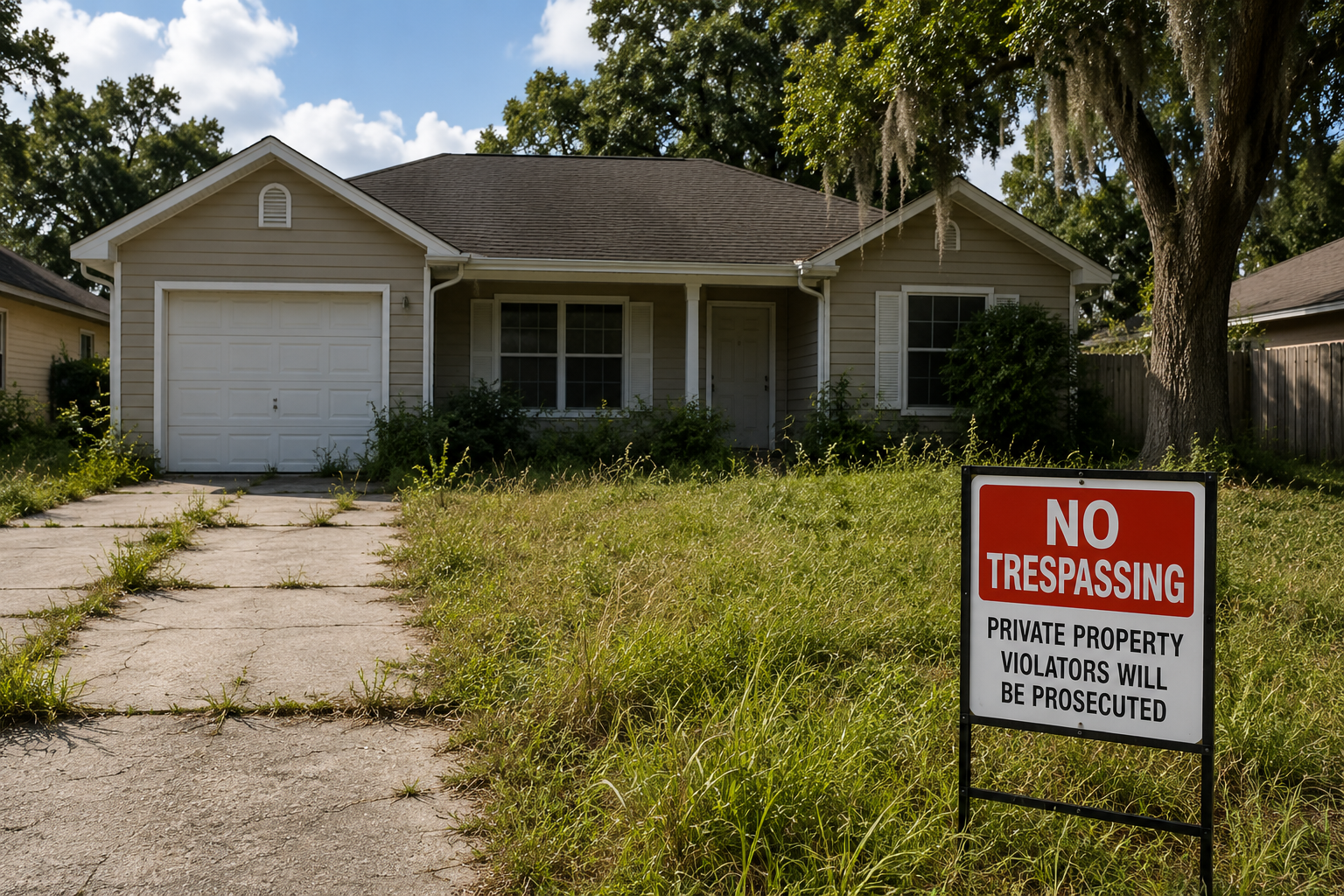
A vacant house during probate can create problems that families may not expect. When someone passes away, their home may sit empty for weeks or even months while the family works through the probate process.
During that time, it’s easy for the property itself to become an afterthought.
But a vacant home still needs to be insured, maintained, secured, and regularly checked. An unnoticed water leak can cause thousands of dollars in damage. An overgrown yard can make the property look abandoned. And a home that appears vacant can become a target for theft, vandalism, break-ins, or unauthorized occupants.
If you’ve been appointed personal representative of an estate with a vacant home in Florida, here are some things you should consider.
Does Homeowners Insurance Still Cover a Vacant House?
Possibly, but don’t assume that it does.
Homeowners insurance policies have their own rules regarding properties that remain vacant or unoccupied for extended periods.
Depending on the policy, coverage for certain types of losses may change or become limited after the property has been vacant for a specified period of time.
That’s why one of the first calls a personal representative should consider making is to the deceased owner’s insurance company or insurance agent.
Tell them:
- The homeowner has passed away
- The property is part of an estate or probate proceeding
- No one is currently living in the home
- Whether furniture and personal belongings remain inside
- Approximately how long the home may remain unoccupied
Most importantly, don’t simply ask whether the insurance policy is still active.
Ask:
“Does my coverage change because no one is currently living in the property?”
The insurance company can explain whether the existing policy remains appropriate or whether different coverage is needed.
Vacant vs. Unoccupied: What’s the Difference?
These words sound similar, but an insurance company may treat them differently.
An unoccupied home generally means nobody is currently living there, but the property remains furnished and suitable for someone to live in.
A vacant home generally has no occupants and may contain little or no furniture or personal property.
However, insurance policies can define these terms differently.
That’s why it’s important to describe the property’s actual condition to the insurance company rather than assuming how it will be classified.
Why Vacant Probate Properties Need Extra Attention
Think about what happens when a pipe starts leaking in an occupied home.
Someone probably notices fairly quickly.
Now imagine the same leak starts in a vacant inherited home that nobody plans to visit for another two weeks.
A relatively small plumbing problem could become a major repair.
Vacant probate properties can face risks such as:
- Water leaks and plumbing failures
- Theft
- Vandalism
- Break-ins
- Unauthorized occupants
- Storm or roof damage that goes unnoticed
- Electrical problems
- Overgrown landscaping
- Accumulated mail and packages
- General deterioration
This is particularly important in Florida, where hurricanes and severe storms create another layer of risk.
Probate may move slowly.
Problems with the house won’t necessarily wait for probate to finish.
What About Someone Breaking Into or Staying in the Property?
This is another reason I encourage families to secure vacant inherited homes early.
A property that clearly looks empty can attract unwanted attention.
Overgrown grass, piled-up mail, no vehicles, dark windows, and weeks without visible activity can signal that nobody is regularly monitoring the property.
Someone could break into the home, steal belongings, vandalize it, or attempt to stay there without permission.
One misconception worth clearing up is that someone has a right to enter or stay in a vacant house simply because there isn’t a No Trespassing sign.
They don’t.
The absence of a sign does not make a private home open to the public or give someone permission to occupy it.
However, clearly posting the property can be another practical step in showing that the home is private property, unauthorized entry isn’t permitted, and someone is actively paying attention to it.
Imagine discovering that someone has been staying in an inherited home without permission. Now you’re trying to establish that the person wasn’t invited to be there while also figuring out what steps are necessary to have them removed.
That’s a situation I’d rather help a family prevent.
A visible No Trespassing sign won’t guarantee that someone won’t enter the property or that law enforcement can immediately remove an unauthorized occupant. But it clearly communicates that entry is not permitted and can be one part of a broader plan to protect a vacant home.
A No Trespassing sign shouldn’t be your only security measure, but it can be part of a larger property-protection plan.
8 Things to Consider When a Probate Property Is Vacant
If you’re responsible for a vacant inherited property, consider taking these steps:
1. Contact the Insurance Company
Notify the insurance company of the homeowner’s death and the property’s current occupancy status.
Ask specifically whether vacancy changes the coverage.
2. Secure the Doors and Windows
Check every exterior door and accessible window.
If you’re authorized to do so, consider changing or rekeying locks, especially if you don’t know who may have copies of the existing keys.
3. Document the Property’s Condition
Take photographs or video of the interior and exterior.
This gives the estate a record of the property’s condition and can help you identify changes later.
4. Have Someone Check the Property Regularly
Don’t allow the property to sit for weeks or months without anyone checking on it.
A quick visit could reveal a leaking pipe, damaged window, roof issue, fallen tree limb, or evidence that someone has entered the property.
5. Keep the Exterior Maintained
An overgrown lawn and overflowing mailbox can advertise that a home is vacant.
Keeping the exterior reasonably maintained can help the property appear cared for and monitored.
6. Consider Lighting or Security Cameras
Depending on the property, exterior lighting, cameras, alarms, or other security measures may be appropriate.
7. Post a No Trespassing Sign
A visible No Trespassing sign can provide another indication that the property is private and being monitored.
8. Start Thinking About the Long-Term Plan
The property may eventually be:
- Kept by an heir or beneficiary
- Rented
- Sold as-is
- Repaired and sold traditionally
You don’t necessarily have to make that decision immediately.
But understanding the property’s condition, expenses, insurance situation, and potential value can help the family make a more informed decision when the time comes.
What If the House Will Eventually Be Sold?
You don’t necessarily need to wait until the end of probate to start understanding the property’s real estate options.
Every estate is different, and the personal representative’s authority to sell can depend on the circumstances of the probate case.
But from a real estate perspective, getting information early can be helpful.
For example, I can help a family understand:
- The property’s estimated market value
- Its current condition
- What it might sell for as-is
- Whether repairs are likely to produce a worthwhile return
- What preparing the property for the traditional market might involve
- Local contractors, clean-out companies, and other property resources when needed
The goal isn’t to pressure the family into selling.
It’s to give the personal representative enough information to make a good decision about the property.
Don’t Let an Empty House Become Another Probate Problem
When you’re serving as personal representative, you may already be dealing with attorneys, court filings, creditors, family members, personal belongings, and financial accounts.
The house can easily become just one more thing on the list.
But a vacant house during probate shouldn’t be ignored. Small maintenance, security, or insurance issues can quickly create additional problems for the estate.
A good starting point is simple:
Insure it. Secure it. Maintain it. Monitor it.
And if the home is vacant, I can help you put a plan in place to protect the property and connect you with the right local resources when needed.
Have a Vacant Probate Property? I’ll Install a No Trespassing Sign for Free.
If you’re responsible for a vacant probate or inherited property in the Jacksonville area, I’ll provide and install a No Trespassing sign at the property at no cost to you.
There’s no obligation to work with me.
There’s no obligation to sell the property.
It’s simply one of the ways I help Jacksonville families protect inherited properties while they’re working through the probate process.
After you submit your request, I’ll contact you to coordinate the property location and installation.
You can also reach out if you have questions about what to do with an inherited property. As a Realtor specializing in probate real estate, I can help you understand your options and determine what makes sense for the property and the estate.
Free sign installation is available for qualifying properties within my Jacksonville service area. The person requesting installation must have the authority to authorize placement of the sign on the property.
Disclaimer: This article is provided for general educational purposes only and is not legal or insurance advice. Insurance policies, probate cases, and individual circumstances vary. Consult a licensed Florida insurance professional regarding insurance coverage and a Florida probate attorney regarding legal questions or the authority of a personal representative.